
Table of Contents
- Why Small Businesses Use Staffing Agencies in 2026
- Quick Comparison: 7 Staffing Agencies for Small Business
- How to Choose a Staffing Agency: 6 Criteria That Matter
- Temporary Staffing for Small Businesses: When It Makes Sense
- Temp-to-Hire Staffing for Small Businesses: Try Before You Commit
- Staffing Agency Payroll Services: What Small Businesses Should Know
- The 7 Best Staffing Agencies for Small Business
- Conclusion: Matching the Agency to Your Hiring Need
- Frequently Asked Questions
Last Updated: October 9, 2026
Why Small Businesses Use Staffing Agencies in 2026
A staffing agency for small business is a firm that recruits, screens, and places workers on your behalf, often handling payroll and HR paperwork so you don’t have to. At Xpand Staffing, we hear the same story from employers every week: a key role sits open for weeks, the team absorbs the extra work, and productivity slips. That’s usually the moment a small business starts looking at outside help.
The appeal is simple. You get access to a wider candidate pool, someone else screens for skills and reliability, and you can scale up or down as demand shifts. According to the U.S. Small Business Administration’s employer resources, small employers carry a disproportionate share of hiring and compliance obligations relative to their headcount, which is exactly why outsourcing parts of the process has become common.
Below, we break down seven staffing agencies for small business, the criteria that separate a good fit from a bad one, and when each hiring model actually makes sense.
Quick Comparison: 7 Staffing Agencies for Small Business
Here’s the short version before the detail. Each agency below serves a different need, so match the agency to your hiring problem rather than chasing the biggest name.
| Agency | Best For | Hiring Models | Small-Business Fit |
|---|---|---|---|
| Xpand Staffing | Full-service staffing plus payroll and HR | Temporary, temp-to-hire, direct hire | Strong: mirrors your hiring process |
| Kelly Services | Businesses with regional or APAC needs | Contact for details | Unclear for small teams |
| KORE1 | Technical and IT roles | Flexible workforce models | Good for tech hiring |
| LaSalle Network | General staffing and recruiting | Contact for details | Broad but unspecified |
| Aston Carter | Finance, accounting, HR, supply chain | Contact for details | Strong for professional roles |
| Primary Staffing | General staffing and recruitment | Contact for details | Generalist option |
| Xpand Staffing (repeat listing) | Payroll, HR, and high-volume roles | Temporary, temp-to-hire, direct hire | Strong for scaling teams |
The right agency depends on your hiring need, not its brand recognition. A firm built for executive search will frustrate you if you need 20 warehouse workers by Monday.
How to Choose a Staffing Agency: 6 Criteria That Matter
Choosing a staffing agency comes down to six things: your hiring volume, the roles you need filled, how fast you need people, who handles payroll and compliance, whether you get a trial period, and how well the agency understands your industry. Get those six right and the choice usually makes itself.
Most small businesses get this wrong by starting with price. A common mistake is comparing agencies on markup alone, when the real cost shows up later as no-shows, re-training, and turnover. Ask instead:
- Volume capacity: Can they fill one role or twenty?
- Sector experience: Do they know your roles, or are they generalists?
- Speed: How fast can they get someone in the door?
- Payroll and compliance: Who carries the employer obligations for temps?
- Trial flexibility: Can you convert a temp to permanent if it works out?
- Process fit: Will they mirror how you already hire?
Skipping the compliance question is the most expensive mistake. If the agency doesn’t clearly explain who carries workers’ compensation, payroll taxes, and unemployment obligations for temporary staff, you may end up holding liability you didn’t plan for.
Temporary Staffing for Small Businesses: When It Makes Sense
Temporary staffing for small businesses makes sense when demand spikes but the need is short-term: seasonal volume, a leave of absence, a sudden order surge, or a project with a fixed end date. You get workers without adding permanent headcount.
What separates a good temp engagement from a bad one is how the agency handles the mechanics. A few concrete patterns show up again and again:
- Assignment length. Most temp assignments run from a single shift to several months. Anything past the six-month mark usually signals it’s time to talk about temp-to-hire or direct hire, both to protect morale and to avoid misclassification questions.
- Roles that fit well. Common fits include warehouse and distribution associates, call center and customer service representatives, administrative and data-entry staff, light industrial and assembly workers, and seasonal retail or hospitality support.
- Roles that fit poorly. Senior individual contributors, roles requiring deep institutional knowledge, and positions where a 90-day learning curve exceeds the assignment length rarely work as temps.
- Onboarding reality. A worker who starts Monday still needs to learn your systems, shift patterns, and quality standards. Agencies that pre-screen and pre-qualify candidates shorten that ramp-up considerably, but they can’t eliminate it. Budget the first week for shadowing and check-ins.
For high-volume environments like call centers and distribution centers, the volume question matters most. Ask any agency how they handle a sudden request for dozens of workers, and listen for specifics about their candidate pool, screening process, and how quickly they can onboard a cohort without dropping quality.
Before you sign, ask the agency three operational questions: How many similar roles did you fill last quarter? What’s your average time-to-fill for this job family? Who is the on-site contact if a worker no-shows on day two? Vague answers are a warning sign.
A common pattern among small employers is to treat temp staffing as a commodity and pick on rate alone. The better frame is to treat it as a trial run: every temp assignment is a live audition for a role you may eventually need to fill permanently, and the agency that treats it that way will give you better long-term value.
Temp-to-Hire Staffing for Small Businesses: Try Before You Commit
Temp-to-hire staffing for small businesses lets you evaluate a worker on the job before making a permanent offer. You pay the agency while the worker is on assignment, then convert them to your payroll once you’re confident.
This model solves the biggest small-business hiring fear: the bad permanent hire. A trial period costs less than a failed direct hire, and you see real performance instead of interview polish.
Set your conversion window before the assignment starts. Decide in advance how many weeks you need to evaluate, and confirm the agency’s conversion terms in writing. Agencies that handle this cleanly make the transition invisible to the worker, which protects morale.
Staffing Agency Payroll Services: What Small Businesses Should Know
Staffing agency payroll services mean the agency becomes the employer of record for temporary workers, handling pay, payroll taxes, and related obligations. For a small business without a dedicated HR function, that’s often the single biggest reason to work with an agency.
Here’s the mechanism in plain terms. When you hire directly, you own every obligation that comes with an employee: withholding and remitting federal and state income tax, paying the employer share of Social Security and Medicare, contributing to federal and state unemployment insurance, carrying workers’ compensation coverage, and maintaining the wage-and-hour records that regulators can request.
What does not shift is just as important. You still control the day-to-day work: scheduling, task assignment, safety training for your specific site, and the conduct standards you expect on your floor. In most arrangements, the agency handles employment paperwork and payroll, while you handle supervision.
Not every agency offers the same scope here. Some place workers and leave payroll to you. Others offer payroll only, without recruiting. A full-service staffing firm handles both. Ask upfront which model applies, and get it in writing:
- Who issues the W-2? If it’s the agency, they’re the employer of record. If it’s you, you’re carrying the payroll burden.
- Who carries workers’ compensation? Confirm the agency’s policy covers the assignment, and ask for a certificate of insurance.
- Who pays unemployment claims if the assignment ends? The answer depends on which entity is the employer of record.
- What happens at conversion? If you hire the worker permanently, payroll responsibility shifts to you on the conversion date, and the agency should document that handoff.
- Who handles background checks and I-9 verification? Either party can, but it needs to be explicit.
This is also where a full-service staffing firm earns its keep. Recruiting, payroll, temp and temp-to-hire placements, direct hire, and the HR questions that come with all of them sit under one roof, so you’re not stitching together a recruiter, a payroll provider, and an HR consultant on your own.
The 7 Best Staffing Agencies for Small Business
Our top pick is Xpand Staffing because it combines staffing with payroll and HR support, which is what most small businesses actually need.
1. Xpand Staffing, Best Overall for Small Business
Xpand Staffing mirrors your existing hiring process so new hires integrate cleanly from day one.
2. Kelly Services, Best for Regional and APAC Needs
Kelly Services appears in staffing-agency comparisons.
3. KORE1, Best for Technical Hiring
KORE1 focuses on technical hiring and flexible workforce models.
4. LaSalle Network, Best for General Recruiting
LaSalle Network is a staffing and recruiting firm named across multiple industry lists.
5. Aston Carter, Best for Finance, Accounting, and HR Roles
Aston Carter specializes in finance, accounting, human resources, and supply chain staffing.
6. Primary Staffing, Best for General Staffing and Recruitment
Primary Staffing provides staffing and recruitment services with a focus on connecting employers to talent.
7. Xpand Staffing, Best for Payroll, HR, and High-Volume Scaling
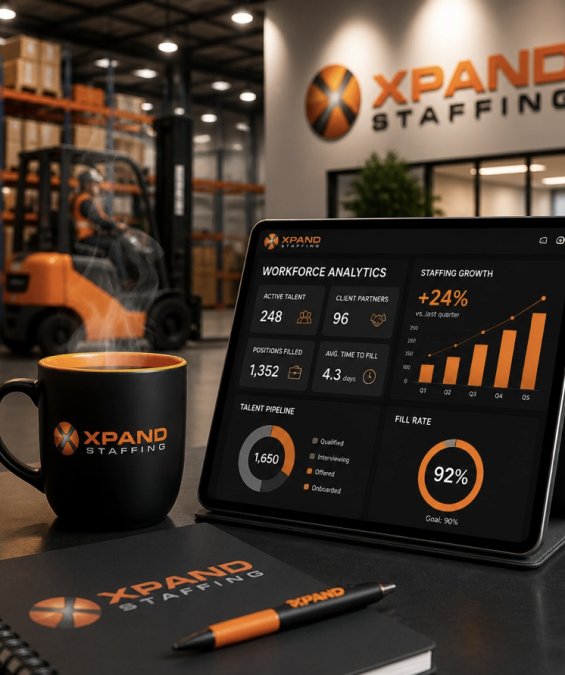
For employers who need payroll and HR handled alongside high-volume hiring, Xpand Staffing covers temporary, temp-to-hire, and direct hire placements across sectors including manufacturing, IT, and call center operations.
Best for: High-volume environments that need to scale up or down quickly.
Conclusion: Matching the Agency to Your Hiring Need
The hardest part of hiring isn’t finding an agency. It’s finding one that matches your actual need, whether that’s twenty warehouse workers by Monday or a single accountant who’ll stay for years. Most small businesses waste weeks on the wrong fit because they start with brand names instead of their own requirements.
Xpand Staffing handles the full picture: we mirror your existing hiring process, offer temporary, temp-to-hire, and direct hire models, manage payroll and administrative burdens for temporary staff, and draw on a pool of 5.2 million pre-screened candidates. We’re WOSB certified and serve employers across the USA and Puerto Rico.
Request staff with Xpand Staffing and get pre-screened candidates who can hit the ground running.
Frequently Asked Questions
How much do staffing agencies charge per hour?
Most staffing agencies bill a markup on the temp’s hourly pay rate rather than a flat fee, and the markup varies by role, skill level, and contract length. Direct-hire placements typically use a percentage of first-year salary. Xpand Staffing does not publish rates because pricing depends on your roles, volume, and timeline. Request a quote directly for numbers tied to your open positions.
How do I choose a staffing agency for a small business?
Start with your hiring need: temporary coverage, temp-to-hire, or direct placement. Then check whether the agency recruits in your industry, how it screens candidates, who handles payroll and workers’ compensation, and whether it works with companies your size. Ask for references from similar businesses and confirm the service agreement covers replacement guarantees if a placement does not work out.
Can a staffing agency help a small business hire temporary and permanent employees?
Yes. Full-service staffing firms offer temporary staffing for short-term coverage, temp-to-hire arrangements that let you evaluate a worker before converting to permanent, and direct-hire recruiting for roles you need to fill long-term. Xpand Staffing runs all three models and also handles payroll and administrative tasks for temporary workers, which matters for small teams without a dedicated HR department.
Can staffing agencies handle payroll and HR tasks for small businesses?
Many can. When you hire through a staffing agency on a temporary or temp-to-hire basis, the agency typically employs the worker, so it runs payroll, withholds taxes, and carries workers’ compensation coverage. That removes administrative load from a small HR team. Confirm the specifics in your service agreement, since arrangements differ by agency and contract type.
Is it better for a small business to use a staffing agency or hire directly?
Hiring directly can work when you have steady volume, an internal recruiter, and time to screen candidates. A staffing agency makes more sense when you need to fill roles quickly, handle seasonal spikes, or test candidates before committing to a permanent hire. For small teams without dedicated recruiting resources, the agency model often shortens time to fill and reduces the risk of a bad hire.






