

Table of Contents
- Why Staffing Agencies With Pre-Screened Candidates Cut Time-to-Fill
- Quick Comparison: How These Staffing Agencies Stack Up
- Inside the Staffing Agency Vetting Process
- Xpand Staffing: Pre-Screened Talent That Mirrors Your Hiring Process
- Frontline Source Group: Retention Guarantees for Direct Hire
- Adecco and TEKsystems: High-Volume and Technical Pre-Screening
- Jomsom, StaffMyAgency, and Virtustant: Speed and Predictable Models
- Temp-to-Hire Staffing Models: Try Before You Commit
- Frequently Asked Questions
Last Updated: October 7, 2026

Why Staffing Agencies With Pre-Screened Candidates Cut Time-to-Fill
Staffing agencies with pre-screened candidates cut time-to-fill because they hand you people who already cleared the basic filters: identity, work history, skills, availability, and often a background check.
Pre-screened staffing is a hiring model where an agency vets candidates against defined criteria before presenting them, rather than forwarding every applicant.
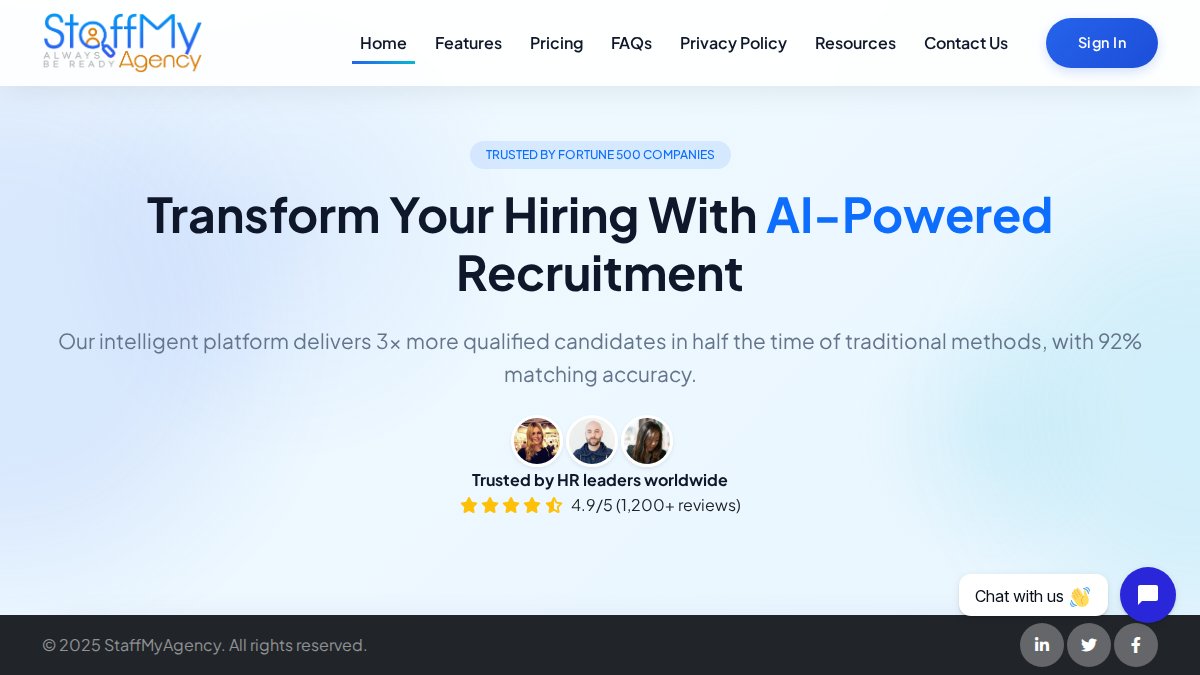
At Xpand Staffing, we build that filter around your process: your shift patterns, your background requirements, your call scripts.
Quick Comparison: How These Staffing Agencies Stack Up
The seven agencies below split into three groups: firms that mirror your process, firms with retention guarantees, and firms built for speed or volume.
| Agency | Best For | Standout Feature | Model |
|---|---|---|---|
| Xpand Staffing | Teams needing process-matched screening | Mirrors your existing hiring process; WOSB certified | Temp, temp-to-staff, direct hire |
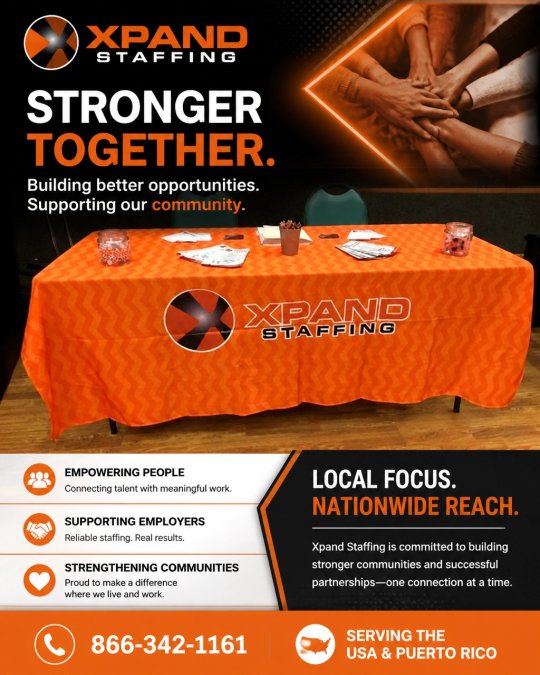
| Frontline Source Group | Long-term retention in professional roles | Placement warranty on direct hire | Direct hire, temporary |
| Adecco | Seasonal and project peaks | Large candidate network for rapid deployment | Temporary, permanent |
| TEKsystems | IT and technical roles | Deep technical vetting | Staff augmentation, managed services |
| Jomsom Staffing | Fast turnaround, multi-site needs | Franchise-based local service | Custom per engagement |
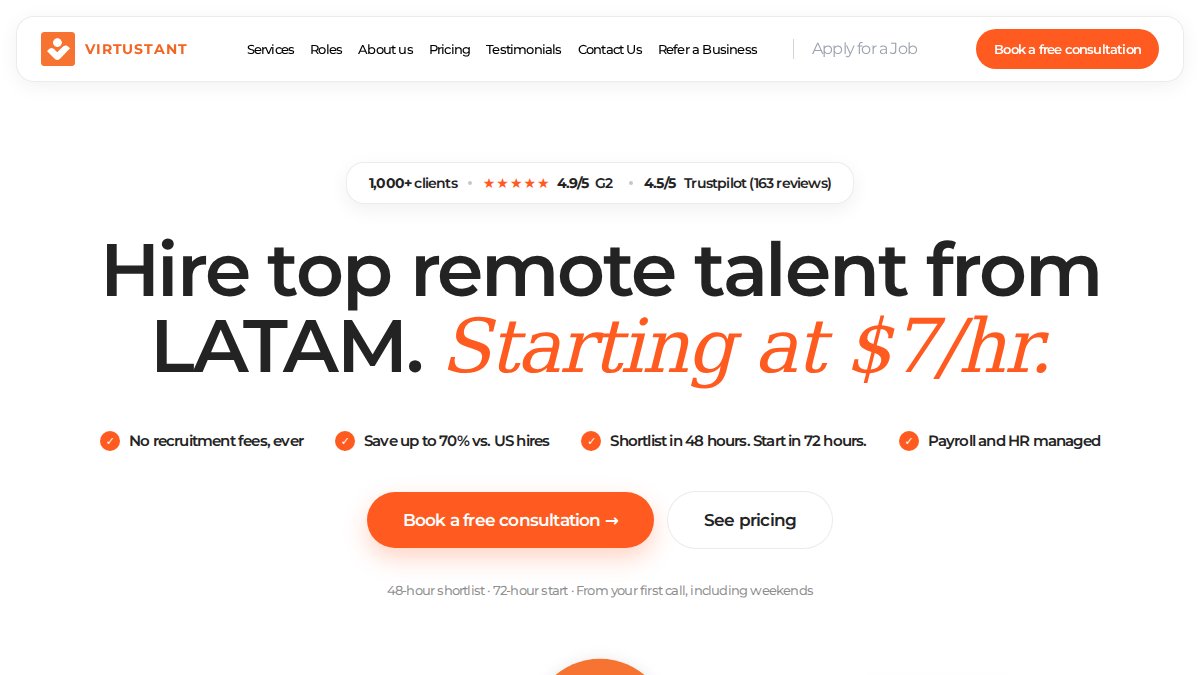
| StaffMyAgency | Predictable recruiting budgets | Fixed monthly subscription | Subscription |
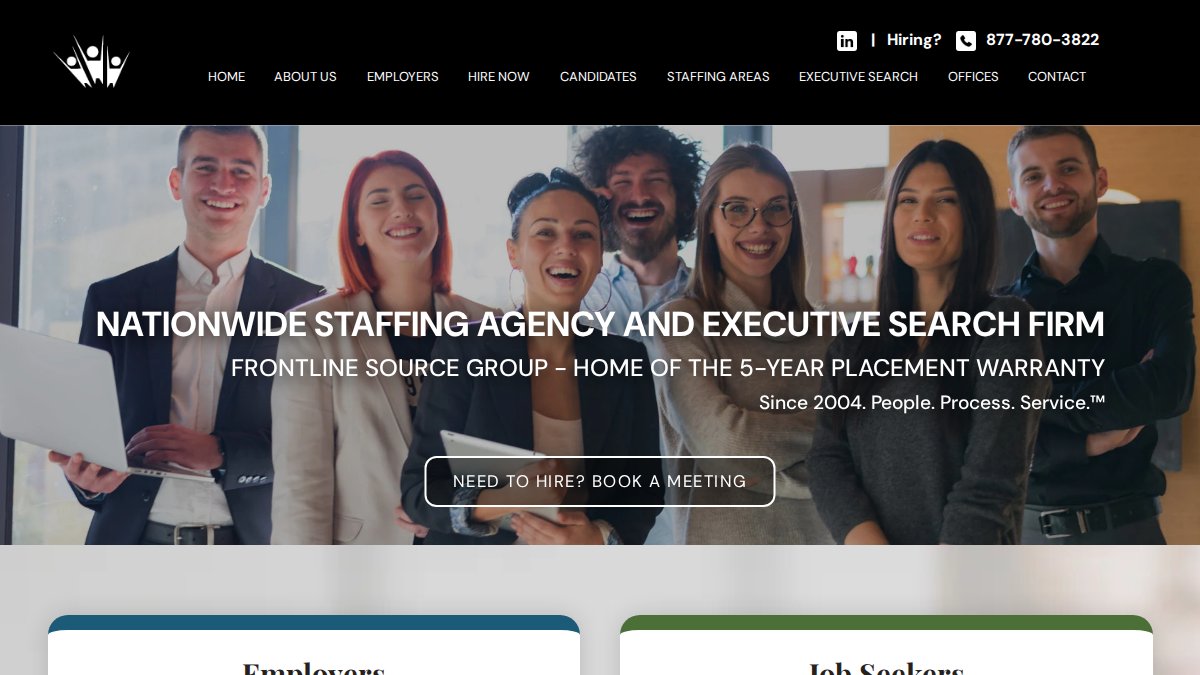
| Virtustant | Remote and virtual roles | All-inclusive hourly billing, no placement fee | Managed remote staffing |
One pattern worth naming: the agencies that cut time-to-fill fastest are not the ones with the biggest databases, but the ones whose screening criteria already match yours.
Inside the Staffing Agency Vetting Process
The staffing agency vetting process is the sequence of checks an agency runs before a candidate reaches your desk. A solid protocol covers five layers; most weak agencies run only the first two.
What a Real Screening Protocol Covers
- Identity and work authorization verification using Form I-9 standards and E-Verify where required
- Skills assessment tied to actual tasks, a call center screen should include a live script read, not a personality quiz
- Background verification aligned to your requirements and run through an FCRA-compliant consumer reporting agency
Skipping the availability layer sounds trivial until three candidates accept an offer and quit in week one because the shift did not work for them.
How the Layers Actually Run in Sequence
A disciplined agency runs the layers in a fixed order because each is a gate. Identity and authorization come first, if a candidate cannot legally work the role, nothing downstream matters. Skills assessment comes second, since it is the most expensive step in recruiter time. Background verification and reference checks run third. Availability and shift confirmation run last, right before submission, because availability changes week to week.
Compliance Standards That Protect You
Pre-screening sits inside a web of federal rules, and a weak agency can expose your company to claims even though the agency did the work. Three standards matter:
- EEOC and Title VII: screening criteria must be job-related and consistently applied. A policy that screens out arrest records but not convictions has drawn EEOC scrutiny, and the agency’s policy becomes your policy once you rely on it.
- FCRA: if the agency runs a background check through a consumer reporting agency, the candidate has rights to disclosure, authorization, and a copy of the report. Skipping those steps is the agency’s error but your liability if you hire on the result.
- Ban-the-box and fair-chance rules: many states and municipalities restrict when an employer can ask about criminal history. A national agency should apply the strictest applicable rule per work location, not a single national template.
Ask any agency for its written screening policy and adverse action process. If it cannot produce both, the “pre-screened” label is marketing, not compliance.
How to Audit an Agency’s Screening Claims
You do not need to see the agency’s proprietary scoring model to verify the process. Ask four questions:
- Which checks run, in what order, and what disqualifies a candidate at each gate?
- Who performs the background check, and is that vendor FCRA-compliant?
- How are skills assessments validated against the actual job tasks?
- What is the adverse action process when a candidate is rejected on a background result?
Agencies that answer these in writing are running a real protocol. Agencies that answer with adjectives are not.
If an agency cannot tell you exactly which checks it runs and in what order, treat “pre-screened” as a marketing word. You will find out the truth on day one, when nobody shows up.
Where Pre-Screening Ends and Onboarding Begins
Screening gets a qualified candidate to your door; it does not keep them there. The handoff between the agency’s vetting file and your onboarding process is where most pre-screened placements stick or fall apart. Ask what documentation transfers with the candidate, I-9 completion, background result summary, skills assessment scores, so your HR team is not re-running checks the agency already paid for.
Xpand Staffing: Pre-Screened Talent That Mirrors Your Hiring Process
Our premise is simple: your screening criteria should be the agency’s screening criteria.
We hold a pool of 5.2 million pre-screened candidates for call center work, and we serve nine sectors including manufacturing, IT, and call center operations.
We also handle payroll and paperwork for temporary staff, so your HR team is not absorbing a second onboarding process every time volume spikes.
The fastest way to cut time-to-fill is to stop re-screening people someone already screened against your own criteria. That is the entire premise behind mirroring a client’s hiring process.
Temporary, temp-to-staff, and direct hire all run through the same screening standard, so switching models does not mean starting over.
Frontline Source Group: Retention Guarantees for Direct Hire
Frontline Source Group leans on retention rather than speed.
That warranty is the differentiator: if a direct hire does not stick, the agency carries some of the risk instead of you.
Where it falls short: the model is built around professional and specialized placements rather than high-volume industrial or call center work. If you need 200 seats filled by Monday, this is not the fit.
Adecco and TEKsystems: High-Volume and Technical Pre-Screening
Adecco and TEKsystems solve two different problems with the same word: scale.
Adecco runs a large candidate network built for rapid deployment. When seasonal peaks hit or a project needs bodies fast, that network is the point.
TEKsystems goes the other direction, specializing in IT and technical talent with deep technical vetting and staff augmentation models built around project work.
Jomsom, StaffMyAgency, and Virtustant: Speed and Predictable Models
Three agencies, three different answers to the same question: how do you make hiring costs predictable?
Jomsom Staffing competes on turnaround. Its franchise-based model gives it local reach with national coverage and fast sourcing cycles.
Virtustant targets remote roles with an all-inclusive hourly rate and no placement fees, removing the upfront cost that scares smaller operations away from agencies entirely.
Temp-to-Hire Staffing Models: Try Before You Commit
Temp-to-hire staffing models place a worker on a temporary basis with the option to convert them to permanent employment after a trial period. The agency stays the employer of record during the trial, so payroll, taxes, workers’ compensation, and administrative overhead sit with them, not you.
That structure solves hiring risk: you see how someone actually performs on your floor, on your shifts, with your scripts, before you commit to a full-time offer.
How the Conversion Actually Works
A temp-to-hire engagement has three phases, and the terms of each should be in writing before the candidate starts:
- Trial period: typically 90 days, though high-volume roles sometimes run 30 to 60. The agency employs the worker, pays them, withholds taxes, and carries workers’ compensation coverage.
- Conversion window: the period during which you can convert the worker to your payroll, usually defined by a set number of hours worked rather than calendar days.
- Conversion fee: most agencies charge a placement fee when you convert, often a percentage of the worker’s first-year salary or a flat amount tied to the role. Some agencies waive or reduce the fee the longer the worker stays on assignment.
Ask for the conversion fee schedule in writing before the first candidate starts. An undisclosed fee is the most common source of dispute in temp-to-hire engagements.
The Cost Math Hiring Managers Should Run
Temp-to-hire is not automatically cheaper than direct hire, and vice versa. The comparison depends on three variables:
- Cost of a bad permanent hire: recruiting cost, onboarding cost, lost productivity during ramp, and the cost of re-recruiting the role. For most non-executive roles, a failed hire costs a meaningful fraction of the annual salary.
- Agency bill rate during the trial: the hourly rate you pay the agency includes the worker’s pay, the agency’s payroll burden, and the agency’s margin. It is higher than the worker’s direct hourly rate.
- Conversion fee at hire: the one-time cost to move the worker onto your payroll.
The break-even question: does the trial period cost less than the expected cost of a bad direct hire, discounted by the probability the trial reveals a problem? For roles with high turnover or hard-to-verify skills, usually yes. For roles you can verify in two interviews, often no.
Co-Employment and Who Carries the Risk
During the trial, the agency is the employer of record, handling payroll taxes, unemployment claims, and workers’ compensation. The agency, not you, is generally the defendant in wage-and-hour claims arising from the assignment.
That protection is real but not absolute. If your supervisors direct the worker’s day-to-day activities like a direct employee, or you treat the worker as yours for benefits or discipline, you can create a co-employment relationship that exposes you to claims the agency was supposed to absorb.
Retention Guarantees and What Happens If It Fails
A pre-screened candidate can still fail. The question is who absorbs the cost. Retention guarantees vary widely:
- Short guarantees (30 to 90 days) are the market standard for direct hire and cover replacement only, not refund.
- Extended guarantees (six months to a year) are less common and usually tied to professional or specialized roles.
- Temp-to-hire guarantees typically cover the trial period itself, if the worker does not work out during the trial, the agency replaces them, often at no additional placement fee.
Read the guarantee language carefully. A replacement guarantee is not a refund guarantee, and one requiring specific performance documentation is not the same as one that does not. Ask what triggers the guarantee, what the agency owes when triggered, and how long the replacement window stays open.
Set your conversion criteria before the trial starts, not after. Decide in advance what performance looks like at day 30 and day 60, and share it with the agency so they screen against it.
When Temp-to-Hire Is the Wrong Model
Temp-to-hire is a poor fit when the role needs months of ramp time before performance is measurable, when the candidate pool is small enough that a trial will scare off strong applicants, or when the role is senior enough that candidates expect a direct offer.
Turnover in high-volume environments rarely traces back to screening alone. It traces back to whether the person was set up to succeed in week one. Onboarding support from your staffing partner closes that gap.
Frequently Asked Questions
What does it mean when a staffing agency provides pre-screened candidates?
It means the agency has already run candidates through interviews, skills assessments, background verification, and reference checks before sending them to you. At Xpand Staffing, the process mirrors your own hiring steps, so every candidate arrives job-ready and familiar with your environment. You skip the initial sorting and spend interview time only on people who already meet your baseline requirements.
How do staffing agencies verify the skills of their candidates?
Agencies use a mix of structured interviews, skills assessments, work samples, and reference checks. For technical roles, they may run hands-on tests or scenario-based evaluations. Xpand Staffing assesses every placement against your specific requirements, which is why their pre-screened pool includes 5.2 million candidates for call center operations alone. Ask any agency what specific assessments they run before you sign.
Are pre-screened candidates more expensive to hire?
The markup covers screening, payroll, and administrative costs you would otherwise absorb internally. For many employers, the total cost is lower because pre-screened candidates start faster and quit less often. Temp-to-hire models let you evaluate someone on the job before committing to a direct hire, which reduces the risk of a bad placement. Pricing depends on role, volume, and duration, so request a quote for your specific needs.
How long does the hiring process take with a pre-screening agency?
Most agencies can present qualified candidates within 24 to 72 hours for high-volume roles like call center or warehouse positions. Direct hire searches for specialized technical roles take longer, often one to three weeks. The speed advantage comes from the agency’s existing talent pipeline: candidates are already vetted, so you move straight to interviews and offers instead of sourcing from scratch.
Do all temp agencies do background checks?
No. Screening depth varies widely. Some agencies only verify work history, while others run criminal background checks, drug screens, and credential verification. If your roles require clean background checks or specific certifications, confirm the agency’s screening protocols upfront. Xpand Staffing mirrors your existing hiring process, so if your company requires background checks, those checks happen before a candidate reaches your desk.
Scaling a workforce without drowning your HR team in screening, payroll, and paperwork is the hard part. Xpand Staffing handles it by mirroring your hiring process, screening against your criteria, and managing the administrative load for temporary staff, with flexible temp, temp-to-staff, and direct hire models and WOSB certification for set-aside work. Request staff and get candidates who are ready to hit the floor.